Monday, December 5, 2011

"These Ain't Bars, This is Barbarity"

Lupe Fiasco's Friends Of The People was one of the most anticipated mixtape's of the year. It received great reviews, with the one that stuck out to me stating, "these ain't bars, this is barbarity." I laughed but it was true for reasons I will later explain. I love Lupe, so of course I was so excited for it to drop. Though when I started listening the intro was pretty interesting, but when Lupe Back started playing the intro to the song was about the recent happenings at UC Davis, from that moment on I knew that the whole tape would have not so subtle undertones about issues of justice. Another song that stuck out to me in that regard was Double Burger With Cheese. Though I don't understand the reasoning for the name or the references in the song that is not what sticks out. He speaks about a lot of different occurrences in recent years as if most people thought we were past those moments and that everyone had forgotten about them. Lupe is 8 years older than I am so obviously I didn't know what half of the people he talks about were because I was either too young or wasn't born yet. So this made me want to look up what he was talking about because of the way he talks about them and since they were obviously important culturally. This made me realize the magnitude of how helpful rappers or other musicians can be in terms of social movements. I knew obviously that they had a great effect, but I realized personally how much I listen to them. Personally, I don't watch the news a whole lot, especially in Pullman, where it looks like it is being broadcasted out of someones living room. I hope the budget they weren't given is being used in a beneficial way, we all know the schools could use it, but I digress. Because I don't watch a lot of news, besides the fact that they frame events in a particular way and generally are not good sources of information, I tend to rely on the internet. Most can clearly tell that social media has greatly impacted our ability to share information and I rely a ton on Twitter. I follow Lupe and over the past couple weeks the Occupy movement has been one of his major topics of interest. Besides just bringing further awareness he has really good advice and is adding his two cents into the conversation. The last tweet I saw from him was from this morning which stated, "And for anyone looking for a copy of "POTO" you can order online & ." He was recommending the book Pedagogy Of The Oppressed. Lupe didn't go to college, but you can tell that he values and feels the need for education, for him and others. Another person I follow on Twitter who I get a lot of social movement information from is Geo of Blue Scholars. Recently, while on tour he wrote a piece about the what he saw at the sites of the Occupy Movement for Aljazeera. He talks about feelings of being underwhelmed and talks about it in terms that I did not expect, but I am glad I read. The first time I remembering hearing about the events that took place at Berkley a few months ago was right around the time I saw his tweet that stated, "Students of color at Berkeley: set up your own bake sale with no product. When a customer asks why, tell em the whites stole your oven ." I laughed, but it made me think about why I believed that was such a good idea and got me thinking more. I commend these two especially because I feel like with a position of power (to some extent) that they didn't have before they became acclaimed rappers that they have a duty to use their voice for good. Though not all are credible, Kanye immediately coming to mind, who I like but needs to stop making bold comments but not acting on anything. For me, they keep me updated and point out a lot of things that I might not see because I am not traveling like they are, seeing everything first hand.


Lupe Back


Double Burger With Cheese


Lupe Fiasco
The West Coast is ACTIVE!!!


Although not about Occupy, he brings up a lot about being skeptical of what you are told and questioning the system of power and inequality..

Lupe Fiasco
Why does TSA get mad when u ask them questions? Especially when u ask questions about the questions they ask you?!?!

Lupe Fiasco
...and sense has long been dead!

Lupe Fiasco
She said why u asking these questions I said bcuz it's my right as an American & we don't live in a tyranny. She went and got the supervisor

Lupe Fiasco
It feels kinda good when the Government calls you a "Rebel"...makes me feel all gooey inside hahaha...

Lupe Fiasco
Oh and the TSA question was "Can you pronounce you first and last name?" my reply was "For What?" then all hell broke loose...


Sunday, December 4, 2011

Katrina

The point in Jordan Flaherty's book Floodlines that seems to stick out the most is the days following the storm. This seemed to me to be the time where you could see the problems that existed before the storm and how the storm magnified the systems of inequality and how Jordan saw his privilege play out. As he speaks about the disparity he saw play out in the encampment that he was at before him and all the others were supposed to be bused out of the city to various locations he states, "in this country, I am frequently reminded skin privilege. I have often run through red lights on my bike, right in front of a police care, and the officers never seem to notice or care. In contrast, young Black men in New Orleans have been arrested for riding a bike with one hand, or biking the wrong way down a one-way street. Never had this apartheid treatment felt more real and immediate than on that day in the Causeway camp. My whiteness felt like a uniform I was wearing, one that gave me access to a citizenship denied to the people all around me" and cites a blogger that had a similar experience, mentioning " I still believe that race played a major role. I saw it personally. These National Guard troops were scared to death because of race. The were mostly from rural areas and for them their knowledge of African Americans comes from TV shows like Cops. They pointed guns at many people, and there were plenty of racial slurs." The sense of anomie is unimaginable to me and the implications were clearly unimaginable to Jordan as well, who claims, "I had been aware of crimes committed globally and domestically by the U.S. government, but I was still completely unprepared for what I saw in the evacuee camp. This neglect and abuse went beyond the systemic problems I knew existed. This looked like ethnic cleansing, here, in a U.S. city, in the twenty-first century." Also, it is really helpful for those that maybe don't understand the extent that white privilege and race factor into why Katrina played out the way it did with the explanation Jordan gives of his experience. He says, "my intersecting layers of privilege as a journalist and a s white male allowed me to escape and get a comfortable ride. While National Guard soldiers kept watch over others in the camp, they had barely noticed as the three of us walked out. We had resources and connections that may New Orleanians didn't, which meant that for us, a stay in a shelter was never a fear. We had friends and family to stay with in Houston and other nearby cities, and offers of places to stay from around the country." Even when he was effected so greatly by the storm he still realizes, even though it was clearly visible, that he had great privilege over others. Though it helped him get out of the city, there were still many that were left behind. One woman claimed that as bus fulls of people left the crowd got darker and darker. And those that were left behind were framed as criminals. Jordan states "New Orleans's hurricane-ravaged population was transformed by the media into criminals. As if takin a stereo from a store is a greater crime than the governmental neglect and incompetence that did billions of dollars of damage and destroyed a city. This media focus is a deliberate tactic. It works in the same way as a focus during the 1980s on "welfare queens" ans "super-predators" ovscured the simultaneous and larger crimes of the Savings and Loan scams and mass layoffs. The hyper-exploited people of New Orleans are being used as a scapegoat. City, state and national politicians are the real criminals here. Since at least the mid-1800s, the danger faces by flooding to New Orleans has been widely known. The flood of 1927, which, like this week's events, was more about politics and racism than any kind of natural disaster, illustrated exactly the danger faced. Yet government officials have consistently refused to spend the money to protect this poor, majority-Black city." Though of course we did not see this idea that what they were "looting" was not as bad as what the government had done to the citizens and to humans in general. The way they framed the people left in the city, gave them the justification for the treatment that they gave. Also, it simply magnified the treatment that they received prior to the storm at a greater magnitude, showing that white lives were valued more than others before and continued after. Jordan claims towards the end of this section of the book that, "in the coming months, billions of dollars will likely flood into New Orleans. This money can either be spent to usher in a "New Deal" for the city, with public investment, creation of stable union jobs new schools, cultural programs and housing restoration, or the city can be "rebuilt and revitalized" to a shell of its former self, whit newer hotels, more casinos, and with chain stores and theme parks replacing the former neighborhoods, cultural centers and corner jazz clubs. Long before Katrina, New Orleans was hit by a hurricane of poverty, racism, disinvestment deindustrialization and corruption. Simply the damage from this pre-Katrina hurricane will take billions to repair." As we can see with instances such as the Jena 6, the path Jordan recommends was not the one taken, yet those that were affected by the hurricane and other injustices in New Orleans, along with many others, have taken great strides to make the city a better place to live (governmental change, etc.).


For me when I realized that there was something wrong, besides seeing that tons of people were stranded in their homes, was when Lil Wayne who I really liked as a 16 year old was seen on the news holding a sign on the side of the road that said something about the injustice (I couldn't find the picture anywhere!), Kanye said George Bush doesn't care about black people, even though I don't love Kanye for being all talk when it comes to justice, and when Tie My Hands and Georgia Bush came out. Obviously, we didn't talk about and were not told the whole story for a reason as we have seen, but this gave another aspect of the story and made me realize that there was clearly something wrong.


Consumer Freedom

Don't believe everything you are told..


Though these claims seem legitimate, watching the video you get a feeling of not knowing the full story behind the matter. First, it is important to realize with this video that the people behind the production of the video have vested interest in discrediting these groups so that the few companies involved, in what Patel calls "the bottleneck" of few corporate giants controlling the entire food system, continue to hold their power to dictate our food system. They use their site as a cloak to what their real agenda is, and honestly they could care less about you as long as they maintain their power and people keep consuming. Patel states in his book Stuffed and Starved, "unless you're a corporate food executive, the food system isn't working for you. Around the world, farmers and farmworkers are dying, with the connivance of elected officials, and at the whim of the market. Though processed food, consumers are engorged and intoxicated. The agribusiness's food and marketing have contributed to record levels of diet-related disease, harming us today and planting a time-bomb in the bodies of children around the world. Supermarket shelves offer an abundance of cheap calories, even as they bleed local economies. We are increasingly disconnected both from the production of our food and from the joy of eating it. Most of this happens with consumers ignorant to the suffering that precedes every mouthful of food. And the architecture of our neighborhoods (sic) and working lives makes it impossible to imagine anything better." Of course it is in the large companies best interest for consumers to not understand this information, and this video and their site can be seen as one of the major contributors in maintaining their position. It seems ironic that they mention that they just want people to know about the extreme agendas of the groups "hypocrisy, junk science, hidden agendas, inconsistencies and misdirection" so that "stop a small group of people from dictating choices for everybody." Even though these groups are simply trying to connect the consumers back to the production of their food, so they can see the injustices done to them and all the people that produce the food. Though the way they frame their point of view is exceptional by saying these groups are implying we are "too stupid to make our own choices," yet they are just betting on the fact that we actually are stupid enough to think we have a choice, while they are the ones creating what we eat and shape the food market, or that we won't question their validity. This would seem to make those that cannot afford healthy food to feel better about what they are able to afford, which happens to be junk. Though when they mention that they don't want government mandates because they "go to far for our taste," this is the point when you should start to realize they are in fact the hypocrites.


This topic more than anything reminds me of the corn syrup commercials that flood TV's across America every day saying that corn syrup is just as good as sugar, yet once again we can see that the people who produce these messages have an interest in Americans believing this idea.


Uploaded by on Sep 7, 2010

This is the blurb they give with the video: The misperceptions surrounding high fructose corn syrup are extensive. To assist consumers in readily identifying added sugars in the diet, the Corn Refiners Association began an educational campaign in 2008 to dispel the myths about high fructose corn syrup, or corn sugar. The goal of this educational effort is to provide consumers credible, science-based information to enable them to make informed decisions about their diet.

Jena 6

The Jena 6 happened post Katrina after the injustices that were portrayed by the media were seen and responded with outrage, though the ineffective social change that was created can be seen by this event when those around the country believed that we learned from Katrina. This however is not that simple. Though Jordan Flaherty gives extensive information on how the incident between 6 Black students and a white classmate led to a nationwide movement centrally located in the small town of Jena, I like how he emphasizes why this movement was different and what it tells us. He states, "Some have labeled the Jena 6 case a throwback to the past, to Jim Crow, but in fact, Jena presented a clear picture of the current state of our system. The Jena Six were living proof that there are still two systems of justice functioning in this country, one for Black people and one for white; one for rich and one for poor. The unpunished incidents in the days and months leading up to the fight were evidence that white students in Jena would never have faced charges if they had beaten up a Black student. Jena didn't become famous because it was so different from what happens elsewhere in the criminal justice system in our country, but because it was such a naked example of what happens every day." Though this seems to be so simple, it is completely true and people, especially the media, need to recognize that this isn't a thing of the past resurfacing, it is common everywhere. This knowledge would help to not see racism as something that is the problems of others, and realizing that it does happen where you live and everywhere else in the country. It would make racism a more visible and pertinent problem that we cannot escape like we choose to do every day. Jordan also states, "Where the national media chose not to focus on the demands of the families, the families "didn't believe the existing system was a solution for anyone involved, white or Black. Instead, by demanding Undoing Racism training--workshops created by the People's Institute for Survival and Beyond--for people from the school and community, they were seeking to address the root of the problem." To me their demands do not seem outrageous, but in this part of the country where they don't want to change their views and are set in their ways it is a lot to ask. For those that do not live near Louisiana it is easy to disconnect yourself and where you live because like I mentioned already we think of it as a problem of others. Their demands were ambitious and revolutionary in this area. The fact that the families realized that this would help to change the problem rather than just freeing their children without charges is amazing for people that didn't have a lot of resources, backgrounds in activism, etc. Also, Jordan mentions how amazing it is that the families were able to create such a movement, because we have not seen many created under the circumstances. This to me is important for two reasons. First, it shows the ability of people to create change even with little resources, the willingness of others to stand up for what is right and that persistence pays off. The other which is not as important but I find endearing is how Jordan writes about the instance. He talks about how choked up he got seeing their hard work paying off and how in awe he was which is really nice because in most books on similar topics they don't show emotion and make it very scholarly sounding. This is helpful because it shows that these are real people and even for someone who experiences being apart of powerful movements and writes about such topics it still effects him and that these are real people also being effected. In addition, it is important to note that even though many different kinds of people were involved and the involvement of white people were of great help, when it came down to the demonstration few showed up. Jordan mentions, "white folks in this country who are serious about building an effective movement need to come to events like this and stand in solidarity. Silence implies complicity." Even though they played a large role in spreading the messages and many supported the movement, their presence/ silence implied that they didn't support it, even though that was not the case. Last, it surprises me, yet at the same time it doesn't, that I faintly remember this happening and that in my urban high school, with whites being a minority, that we didn't even talk about this once. I was 16 at the time, so it's not like we couldn't tell that the country we live in isn't as great as were told, but it still surprises me that we didn't even talk about it once in class or among peers.


Short documentary about the Jena 6


La Via Compesina and The CIW

The major difference between La Via Compesina and the CIW is the scale of their work. La Via Compesina is an international effort, while the CIW is limited to mostly the East Coast and advocating in America. According to La Via Compesina's website, "La Via Campesina is the international movement which brings together millions of peasants, small and medium-size farmers, landless people, women farmers, indigenous people, migrants and agricultural workers from around the world. It defends small-scale sustainable agriculture as a way to promote social justice and dignity. It strongly opposes corporate driven agriculture and transnational companies that are destroying people and nature." While the CIW claims, "the CIW is a community-based organization of mainly Latino, Mayan Indian and Haitian immigrants working in low-wage jobs throughout the state of Florida...we fight for, among other things: a fair wage for the work we do, more respect on the part of our bosses and the industries where we work, better and cheaper housing, stronger laws and stronger enforcement against those who would violate workers' rights, the right to organize on our jobs without fear of retaliation, and an end to involuntary servitude in the fields." Though their missions are different they fight for a lot of the same things. The focus for the CIW is to bring awareness to the issues in Florida's agribusiness and to receive decent wages for the work they do. On the other hand, La Via Compesina is resisting big companies taking over small-scale farming because of the importance it has historically and still does hold in all countries. The CIW knows that people are disconnected from the production of their food so they go after the part of the food system that we see, the business. They have gone after McDonalds, Taco Bell and Burger King, some of the major fast food chains, to work with them. This was very smart because if they didn't join in the efforts it would dramatically effect their business because people expect them to hold our best interests of value and if they don't it makes them look very bad to the public. They claimed that to their knowledge the injustices that were proposed were not happening showing their disconnect from production as well, but the facts don't lie. The CIW was able to get them on board and also attempted to confront supermarkets as well, yet only Whole Foods has gotten on board. They continue to fight for the justice they deserve and have made their problems national problems, visible to many that would never see it otherwise. They still face many obstacles. Since there is such a disconnect between production of food in America a lot of people still do not know about what is happening to these people living in our very own country. Also, their efforts are limited to the funds they can raise through their site and various other ways. In addition, the bosses of the workers make it very hard for them to unionize, and many that would probably love to join the movement don't have a ton of time after long days of working or are worried they will lose their jobs that they depend heavily on. Also, they Latino people are seen in America effects the attitudes of those seeing these people struggle and being either indifferent or not caring, though not everyone is like this. Silvia Giagnoni states in Fields of Resistance, "Low-income Latino immigrants, who make up most of today's farm working population, are all too often demonized in public discourses. Labels like "illegal aliens" or "illegal immigrants" have the effect of dehumanizing real people who might not have citizen rights yet, but surely deserve to be respected as human beings and recognized, if anything, for their economic contribution to the wealth of the nation. They are often mistreated and robbed, and, increasingly, victims of hate crimes and racial profiling." La Via Compesina takes a slightly different approach and at a much larger scale. Though they do protests and do a lot to spread their messages to the masses, they are working to secure the future for small scale agriculture by advocating straight to the government to change the system and prevent the dangers of the path we are currently on. They work to bring awareness to the dangers of Free Trade Agreements (especially in Asia and other countries like it), and bring up other various issues that effect all of the 200 million peasant farmers among 70 countries. Though there are also struggles that these groups also face. For instance, multinational companies are very powerful and have a way of spinning things to discredit others, to silence them and dispose of workers to find new ones that will not complain, so it makes their fight very difficult. Though they do a great job and have many powerful resources.


Short overview of the issues and work of L Via Compesina


Documentary made about the Immokalee Workers

Sunday, November 13, 2011

Extra Credit Portion: Food Inc.

Richard Lobb of the National Chicken Council says in the film, “In a way, we’re not producing chickens, we’re producing food.” What does this statement mean? Do you agree or disagree with it? How might this perspective affect the way that chickens are raised?


This statement means that we are viewing chickens as simply food and are raising them to benefit human consumption even if it hurts them. We only see them as a product instead of something that lives and breathes, even much differently than we did just a few decades ago when we raised chickens instead of manufacturing them to be the same and to be what the manufacturer wants out of them. This affects the way chickens are raised because they are not treated like animals should be, even if they are for eating. The way they are treated during the process is inhumane and is devastating in the effects on the chickens and disease and problems that the production can cause for humans.


In the film, food science professor Larry Johnson says, “If you go and look on the supermarket shelf, I’ll bet you 90 percent of [the products] would contain either a corn or soybean ingredient. And most of the time, it’ll contain both.” Why might it be a problem that the majority of our food is made mostly from just corn and soybeans—so that nearly everything we eat contains them?


When this part came on I thought of Patel’s comment about soy that states, “ you’d have to be diligent to spend a day without coming into contact with it. Yet, with rare exception, it’s not an ingredient that advertises itself. It has come to occupy a key place in the world food system not because of its taste or flavour, but because of its utility to everyone except the consumer. At best, this means surrendering control over something ingested every day. But the darker story, involving environmental destruction, murder and slavery, it this: through the modern food system, through its monoculture and industrial production methods, one of the finest plants on the Earth has come to be a tyranny to those who grow it, and a mystery to those who eat it.” This is similar for corn too. Often it is used to produce items cheaper, quicker, easier, but does not benefit the health of the consumer at all. By taking the various names that corn and soy products do it helps to disguise the reality of the product and the story behind it.


In the film, union organizer Eduardo Peña says, “We want to pay the cheapest price for our food. We don’t understand that it comes at a price.” Do you agree or disagree with him? What evidence do you see in the film that led you to agree or disagree? What evidence do you see in your life that informs your position as well?


I agree 100 percent! The part that stuck out the most for me was how many diseases have evolved to the current methods of production, yet if we did things differently they would never exist. Also, instead of creating better environments for the animals, using better practices, etc. they create resistances to the various bacteria and diseases. In addition, the rates of diabetes and other health problems that people 60 years ago did not have at the rates we do now because of how much the production of food has changed. This made me think of all the people I know with various diseases, especially diabetes and obesity, and how that has been impacted by the food that is sold and “choice.” Another spot that stuck out was when they were mentioning E coli outbreaks. I did all-star cheer with a friend that had E coli when she was about 11 from fast food and ended up getting a large settlement from it as if that was compensation for almost dying and it made me think about how the company it came from probably did not change their practices after that and just paid them off to make it right (after years of court).


As portrayed in the film, cost and efficiency drive our current food system. Should price be the most important force behind our food industry? Why or why not? How might our food system change if it was driven by other values, like health or environmental sustainability?


I think that price should not be the force behind the food industry and instead health, health of humans, health of animals and the “health” of the land (sustainability) should be taken into account and should be the most important value. Without any of those things there won’t be people, animals, plants or sufficient land to use to create food. If price is the driving force it diverts from the point of food, to nourish. If the system were based on health I think that it would look a lot different, though it is hard to say what it would look like since I haven’t ever seen that. I think it could be a lot like how it was 100 years ago but slightly more contemporary, with a lot of food being grown locally, not as much processed food, and food with few ingredients that people can readily identify.


Saving seeds from each year’s crop is a tradition farmers have followed for thousands of years. Think of a tradition that has been in your family for a long time. What if you could no longer have this tradition because someone now legally claims it as theirs?


I would be pissed. For farmers they have been doing that for hundreds of years and if I were them that would make me worried because farming has changed and isn’t wholesome like it once was and the farmers seemed like they wanted it to remain. You can tell just by watching their interviews that they feel helpless and bound by the limitations without having to say it.


In the film, author Michael Pollan says, “I think that one of the most important battles for consumers to fight is the right to know what’s in their food and how it’s grown.” How does his position compare with the California Farm Bureau’s position?


The California Farm Bureau said that they didn’t want to create fear before they were able to educate on the reasons for using the technology that they were employing, to which he replied that they (along with others) don’t want you to know but also make it illegal to criticize their products. How they frame it sounds nice, but it is to benefit them. I definitely haven’t been educated on the technology of using cloned meat.


Do you think the film privileges the experiences and dilemmas facing people in the United States? Why and why not?


I think it does. It should be a global issue, but I think it’s more powerful for Americans to see that it is happening to them than to someone in a developing country just because of the selfishness that Americans possess and that it is normalized that people in developing countries have problems with food. We seem to think we live in this great place that would never do something (all the things discussed in the film) to us, so it holds more weight since we don’t expect it to happen here and be a personal problem instead of someone else’s problem.


Overall reaction to film?


I liked the film. I’ve seen parts of it before but it just reinforces everything we have been talking about in class and has affirmed to me that I need to pay attention to what I eat since it has so many health implications and since I don’t want to support a lot of these products.

Saturday, November 5, 2011

Banana's


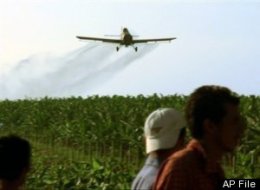
According to the Banana Link, "the banana and plantain family is the fourth most important staple crop in the world. Bananas and plantains are critical for food security in many tropical countries. World banana production amounts to some 70 million tonnes per year concentrated in Africa, Asia, the Caribbean and Latin America because of the climatic conditions." Several million people depend on bananas as a food source and to keep them alive. Many are used for export, but the largest producers, India and Brazil export very little because most are consumed by people in their own countries. Ecuador, Costa Rica, Columbia and the Philippines are among some of the largest exporters of "dollar" bananas (, with the U.S. being among the top importers. The workers work in large monoculture factories that are known to cause harm to the environment. Banana Link mentions, "these huge plantations have a significant environmental impact including soil erosion, water pollution, deforestation and a steady increase in pests and diseases that can only be fought with more harmful pesticides. Aerial spraying of pesticides contributes to water and land contamination. The colonization (sic) of large tracts of land by banana companies has often driven out indigenous populations and accelerated deforestation and soil depletion, provoking more frequent and more dramatic flooding of the land." In general, they are subjected to very poor conditions for long hours (at least 12 hours) and low wages with little job security, using large amounts of harmful chemicals. Workers are not allowed to create associations or form unions to bargain for better conditions and these regions are known to take violent means to affect such organizing. It is noted, "Ecuador, Colombia and Peru are the only countries among the major banana exporters which still have a few thousand small banana farmers alongside the large-scale plantations. The smallholders fulfill (sic) a vital buffer function for the banana exporters. They buy from small producers when the demand on the international market is high, but if less bananas are consumed on the market, they are forced to sell them well below their cost of production." The use of pesticides in these countries is 16.3 times what is used for crops in industrialized countries. Also, "Studies conducted by the National University of Heredia in Costa Rica reveal that rates of pesticide poisonings are three times higher in the banana regions than in the rest of the country. They also show that cases of sterility and cancers are more and more frequent among workers." Not to mention that their children play in these areas since many families live near or on the plantations, causing problems for the whole family, not just the workers. The plantations are controlled by five major companies, creating the bottleneck of the banana industry and a race to the bottom. It is claimed, "because of their size, the companies are very powerful both in exporting countries and in their country of origin. Today, they set producer countries competing with each other, pressuring governments to accept favourable policies on corporate taxation, export taxes, preferential access to loans, and deregulation of social and environmental policies." Making any threat of taking business to another region that will not complain or ask for better conditions a big advantage in keeping workers quiet and compliant, since they are seen as disposable. Banana Link states, "supermarkets are now the only players in the banana chain to consistently make profits from bananas, having dramatically increased their economic power in the banana chain in the last decade. Bananas are the single most profitable item passing through the check-outs in British supermarkets, accounting for 1% of all sales. In the USA, it is estimated that bananas represent 2% of the total turnover of North American grocery retailers; in Britain, it is probably more than this." After they reach this point, the image of the supermarket helps to make them look like the "good guy," because they are the ones that are trying to keep the prices low, compared to their competition, for the consumer. Even though this is only in their self-interest. In the conclusion of Patel's stuffed and Starved he states, "unless you're a corporate food executive, the food system isn't working for you. Around the world, farmers and farmworkers are dying, with the connivance of elected officials, and at the whim of the market. Though processed food, consumers are engorged and intoxicated. The agribusiness's food and marketing have contributed to record levels of diet-related disease, harming us today and planting a time-bomb in the bodies of children around the world. Supermarket shelves offer an abundance of cheap calories, even as they bleed local economies. We are increasingly disconnected both from the production of our food and from the joy of eating it. Most of this happens with consumers ignorant to the suffering that precedes every mouthful of food. And the architecture of our neighbourhoods and working lives makes it impossible to imagine anything better." This can be seen clearly through the example banana production.


The way they frame how the banana's are produced in a way that makes the UK look good and that the production is harmless.

Did anyone catch the fact that if they aren't up to par they are used to feed livestock or made into baby food?!