The Jena 6 happened post Katrina after the injustices that were portrayed by the media were seen and responded with outrage, though the ineffective social change that was created can be seen by this event when those around the country believed that we learned from Katrina. This however is not that simple. Though Jordan Flaherty gives extensive information on how the incident between 6 Black students and a white classmate led to a nationwide movement centrally located in the sm all town of Jena, I like how he emphasizes why this movement was different and what it tells us. He states, "Some have labeled the Jena 6 case a throwback to the past, to Jim Crow, but in fact, Jena presented a clear picture of the current state of our system. The Jena Six were living proof that there are still two systems of justice functioning in this country, one for Black people and one for white; one for rich and one for poor. The unpunished incidents in the days and months leading up to the fight were evidence that white students in Jena would never have faced charges if they had beaten up a Black student. Jena didn't become famous because it was so different from what happens elsewhere in the criminal justice system in our country, but because it was such a naked example of what happens every day." Though this seems to be so simple, it is completely true and people, especially the media, need to recognize that this isn't a thing of the past resurfacing, it is common everywhere. This knowledge would help to not see racism as something that is the problems of others, and realizing that it does happen where you live and everywhere else in the country. It would make racism a more visible and pertinent problem that we cannot escape like we choose to do every day. Jordan also states, "Where the national media chose not to focus on the demands of the families, the families "didn't believe the existing system was a solution for anyone involved, white or Black. Instead, by demanding Undoing Racism training--workshops created by the People's Institute for Survival and Beyond--for people from the school and commun
 ity, they were seeking to address the root of the problem." To me their demands do not seem outrageous, but in this part of the country where they don't want to change their views and are set in their ways it is a lot to ask. For those that do not live near Louisiana it is easy to disconnect yourself and where you live because like I mentioned already we think of it as a problem of others. Their demands were ambitious and revolutionary in this area. The fact that the families realized that this would help to change the problem rather than just freeing their children without charges is amazing for people that didn't have a lot of resources, backgrounds in
 activism, etc. Also, Jordan mentions how amazing it is that the families were able to create such a movement, because we have not seen many created under the circumstances. This to me is important for two reasons. First, it shows the ability of people to create change even with little resources, the willingness of others to stand up for what is right and that persistence pays off. The other which is not as important but I find endearing is how Jordan writes about the instance. He talks about how choked up he got seeing their hard work paying off and how in awe he was which is really nice because in most books on similar topics they don't show emotion and make it very scholarly sounding. This is helpful because it shows that these are real people and even for someone who experiences being apart of powerful movements and writes about such topics it still effects him and that these are real people also being effected. In addition, it is important to note that even though many different kinds of people were involved and the involvement of white people were of great help, when it came down to the dem
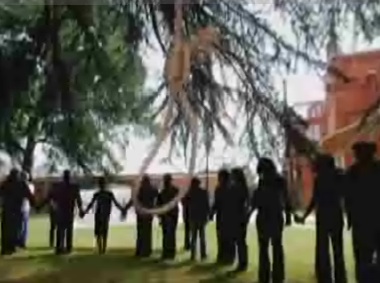
 onstration few showed up. Jordan mentions, "white folks in this country who are serious about building an effective movement need to come to events like this and stand in solidarity. Silence implies complicity." Even though they played a large role in spreading the messages and many supported the movement, their presence/ silence implied that they didn't support it, even though that was not the case. Last, it surprises me, yet at the same time it doesn't, that I faintly remember this happening and that in my urban high school, with whites being a minority, that we didn't even talk about this once. I was 16 at the time, so it's not like we couldn't tell that the country we live in isn't as great as were told, but it still surprises me that we didn't even talk about it once in class or among peers.
 all town of Jena, I like how he emphasizes why this movement was different and what it tells us. He states, "Some have labeled the Jena 6 case a throwback to the past, to Jim Crow, but in fact, Jena presented a clear picture of the current state of our system. The Jena Six were living proof that there are still two systems of justice functioning in this country, one for Black people and one for white; one for rich and one for poor. The unpunished incidents in the days and months leading up to the fight were evidence that white students in Jena would never have faced charges if they had beaten up a Black student. Jena didn't become famous because it was so different from what happens elsewhere in the criminal justice system in our country, but because it was such a naked example of what happens every day." Though this seems to be so simple, it is completely true and people, especially the media, need to recognize that this isn't a thing of the past resurfacing, it is common everywhere. This knowledge would help to not see racism as something that is the problems of others, and realizing that it does happen where you live and everywhere else in the country. It would make racism a more visible and pertinent problem that we cannot escape like we choose to do every day. Jordan also states, "Where the national media chose not to focus on the demands of the families, the families "didn't believe the existing system was a solution for anyone involved, white or Black. Instead, by demanding Undoing Racism training--workshops created by the People's Institute for Survival and Beyond--for people from the school and commun
 ity, they were seeking to address the root of the problem." To me their demands do not seem outrageous, but in this part of the country where they don't want to change their views and are set in their ways it is a lot to ask. For those that do not live near Louisiana it is easy to disconnect yourself and where you live because like I mentioned already we think of it as a problem of others. Their demands were ambitious and revolutionary in this area. The fact that the families realized that this would help to change the problem rather than just freeing their children without charges is amazing for people that didn't have a lot of resources, backgrounds in
 activism, etc. Also, Jordan mentions how amazing it is that the families were able to create such a movement, because we have not seen many created under the circumstances. This to me is important for two reasons. First, it shows the ability of people to create change even with little resources, the willingness of others to stand up for what is right and that persistence pays off. The other which is not as important but I find endearing is how Jordan writes about the instance. He talks about how choked up he got seeing their hard work paying off and how in awe he was which is really nice because in most books on similar topics they don't show emotion and make it very scholarly sounding. This is helpful because it shows that these are real people and even for someone who experiences being apart of powerful movements and writes about such topics it still effects him and that these are real people also being effected. In addition, it is important to note that even though many different kinds of people were involved and the involvement of white people were of great help, when it came down to the dem
 onstration few showed up. Jordan mentions, "white folks in this country who are serious about building an effective movement need to come to events like this and stand in solidarity. Silence implies complicity." Even though they played a large role in spreading the messages and many supported the movement, their presence/ silence implied that they didn't support it, even though that was not the case. Last, it surprises me, yet at the same time it doesn't, that I faintly remember this happening and that in my urban high school, with whites being a minority, that we didn't even talk about this once. I was 16 at the time, so it's not like we couldn't tell that the country we live in isn't as great as were told, but it still surprises me that we didn't even talk about it once in class or among peers.
Short documentary about the Jena 6

EXCEPTIONAL EFFORT (like all your posts). Amazing effort
ReplyDeleteYou bring up the lack of visible white solidarity with this movement and that really strikes a chord with me. After this class, I'm beginning to get the feeling that the dominant white culture is really lacking when it comes to the ability to organize. It almost seems like the concept of community is completely absent. One of my favorite things about Flaherty's book was how strongly he portrays that sense of community. After reading his descriptions of New Orleans second lines and community events, I was ready to up and move.
ReplyDeleteAs a bit of an aside: As a pre-med student, one of the things I'm supposed to be continuously aware of is community and how I fit into it. This is partly why volunteering is so important for the application process. This has been immensely difficult for me; before coming to WSU I wasn't even sure what community really meant conceptually. The volunteering I have participated in has seemed pretty meaningless. Simultaneously, a considerable amount of competition in my major has made my efforts to establish a sense of community there very difficult. I suppose my point is just that I agree; I think as whites, we have a lot to learn about context and existing as part of a society. After all, no man is an island.